
KE Spotlight
Filter
-
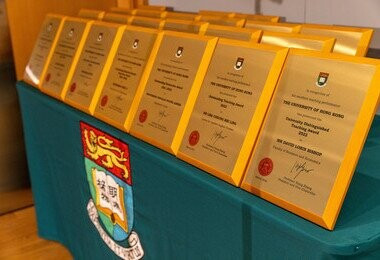
2026年学院知识交流奖
香港大学每年的「学院知识交流奖」,由各学院选出对知识交流作出重要贡献的教员,表扬他们对工商界或社会所带来的经济、社会或文化影响。2026年「学院知识交流奖」的得奖名单已公布。
Read More -

Transforming Urban Mobility: AI-Driven Solutions for Hong Kong’s E-Hailing Services
Recent advances in AI and optimisation algorithms are paving the way for smarter, more efficient urban mobility in Hong Kong. As e-hailing taxi services such as HK Taxi, Didi HK, Uber Taxi, and eTaxi continue to grow rapidly, the industry faces persistent operational challenges—particularly in efficiently matching drivers and passengers and in balancing fleet distribution across the city.
Read More -

HKU Drives Sustainable Heritage Revitalisation in Chengdu
Driven by a strong institutional ethos of sustainability, HKU deepens its commitment to translating academic insights into practical solutions for sustainable development. Led by Dr. Linda Shetabi, Senior Lecturer and Director of the MSc. Conservation Programme at the Division of Landscape Architecture, HKU students participated in a week-long Practical Training Workshop in Chengdu, China.
Read More -
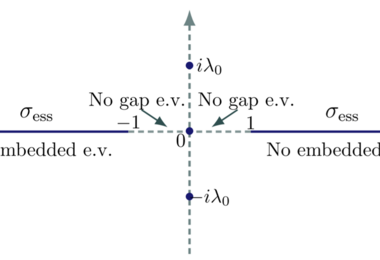
Century-Old "Spectral Ghost" Paradox Resolved
In a landmark achievement, a research team led by Prof. Dong Li, Chair Professor in the Department of Mathematics at HKU, has resolved a long-standing mathematical paradox known as the spectral ghost in nonlinear dispersive equations. This breakthrough, published in the prestigious, peer-reviewed academic journal that publishes original research papers across all fields of mathematics, Inventiones mathematicae, carries profound implications for both fundamental science and societal advancement.
Read More -
Unlocking Quantum Potential: How AI is Contributing to the Future of Quantum Technologies and Society
A groundbreaking research project led by Prof. Giulio Chiribella, Associate Director (Research & Graduate Studies) of HKU’s School of Computing and Data Science, is transforming how we understand and interact with the quantum realm. The key idea of this project is to “See the Quantum World Through the Eyes of AI," leveraging artificial intelligence (AI) to characterise and control large-scale quantum systems—an essential step toward realising practical quantum technologies, such as quantum computers and quantum communication networks.
Read More -

Advancing the I&T Ecosystem: HKU TEC Launches Gobi-HKU Fund I and Venture Mentoring Service
HKU’s Techno-Entrepreneurship Core (TEC) has taken significant steps to enhance regional development and technological innovation through the launch of two major groundbreaking initiatives.
Read More -
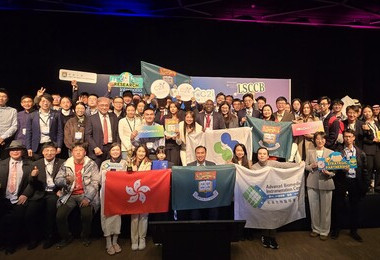
HKU Receives 46 Awards at the 51st International Exhibition of Inventions of Geneva
HKU received 46 awards at the 51st International Exhibition of Inventions of Geneva, held from 11 to 15 March 2026 in Geneva, Switzerland. This result reflects the University’s ongoing work in research and innovation across different fields.
Read More