

Advancements in Elderly Care: Innovative Robotic Hands
In an era of rapid global ageing, the need for effective solutions to support elderly care has never been more pressing.

Prof. Ping Luo
Prof. Ping Luo, Assistant Director at HKU’s School of Computing and Data Science (CDS) and Associate Director of the Musketeers Foundation Institute of Data Science, is leading groundbreaking research to develop a 20-DoF (Degrees of Freedom) lightweight tendon-driven robotic hand, specifically designed for elderly care applications. This innovative technology promises to transform the way assistance is provided to seniors, enhancing their quality of life while alleviating the burden on caregivers.
The dexterous robotic hand integrates tactile sensing capabilities, allowing it to perceive and interact with its environment in a manner akin to human hands. This sensory feedback is crucial for executing delicate tasks such as feeding, medication handling, and everyday object manipulation. By incorporating high-resolution tactile sensors, the robotic hand can discern subtle variations in texture and pressure, reducing the risk of accidents and improving overall safety.
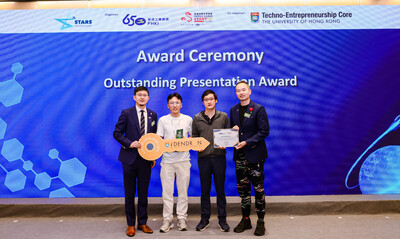
Knowledge exchange plays a vital role in advancing this research. Prof. Luo’s collaboration with interdisciplinary teams, including engineers and healthcare professionals, promotes the convergence of ideas and innovations to address the real-world challenges faced by ageing populations. Furthermore, partnerships with research institutes and companies in the Greater Bay Area (GBA), such as the Shenzhen Loop Area Institute (SLAI) and Stella Robot, foster an ecosystem in which academic research translates into practical solutions for the community.
The societal impact of Prof. Luo's work extends beyond merely enhancing robotic technology; it also aims to empower older adults, contributing to their independence and dignity. As this project advances towards industrialisation, it sets a new standard for assistive technologies, paving the way for more autonomous, sensitive, and reliable robotic systems in elderly care. Ultimately, this research epitomises a commitment to improving societal well-being through effective and innovative technological solutions.

|
The lightweight design of Prof. Ping Luo’s 20-DoF tendon-driven robotic hand offers several key benefits for elderly users: |
|---|
|
Ease of Use: A lightweight hand is easier for seniors to handle, reducing fatigue and providing a more manageable experience when using assistive technologies. |
|
Enhanced Dexterity: The design allows for more agile and precise movements. This is crucial for seniors who may require careful assistance with daily tasks like eating, taking medication, or manipulating objects. |
| Reduced Physical Strain: A lighter device places less strain on the user's muscles and joints. This is particularly important for elderly users who may have limited strength or mobility, allowing them to use the robotic hand comfortably for longer periods. |
| Increased Safety: The lighter weight enables faster and more responsive reactions, which can minimise the risk of accidents. This is essential for applications involving sensitive tasks, where quick adjustments are necessary to prevent spills or drops. |
| Improved Independence: By facilitating easier interaction with their environment, a lightweight robotic hand can empower seniors to perform daily activities independently, enhancing their quality of life and self-esteem. |
| Mobility and Portability: For users who may need to carry or move their assistive device, a lightweight design makes it more convenient to transport and integrate into various settings, be it at home or in public. |