

Revolutionising Computing: Insights from Prof. Ngai Wong

Revolutionising Computing: Insights from Prof. Ngai Wong
Revolutionising Computing: Insights from Prof. Ngai Wong

Revolutionising Computing: Insights from Prof. Ngai Wong

Prof. Ngai Wong
In an era where artificial intelligence and computing are evolving rapidly, Prof. Ngai Wong from HKU’s Department of Electrical and Computer Engineering and Director of the Emerging Microelectronics and Ubiquitous Systems (EMUS) Lab is at the forefront of research that intertwines biological intelligence and advanced hardware. His work centres on the concept of "dual-system collaboration," in which two distinct systems enhance each other's performance to deliver groundbreaking results.
Prof. Wong likens dual-system collaboration to dance partners that amplify one another’s strengths. “In our brain-computer interface research, we pair the human brain with a memristor chip,” he explains. During their six-hour training sessions, the brain provides valuable error signals, which the chip decodes and learns from. This closed-loop synergy boosts accuracy by approximately 20% compared to an open-loop system.
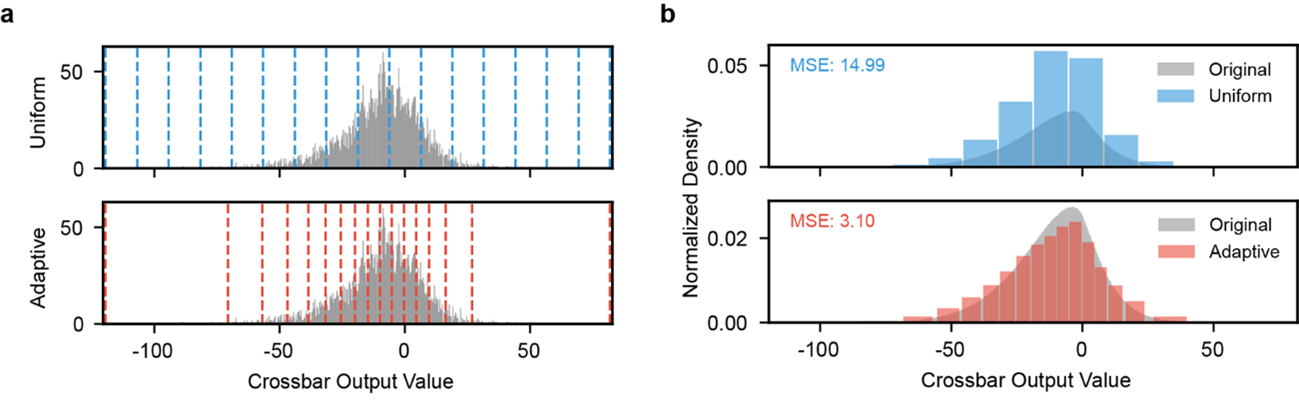
His work extends to developing innovative adaptive analogue-to-digital converters (ADCs) that bridge the gap between the analogue world and digital processing. Traditional ADCs consume significant energy and chip space, but Wong’s memristor-based design adapts to various signal types, achieving 15 times better energy efficiency and reducing spatial requirements by 13 times. “We tailored sensitivity settings for different neural network layers, dramatically cutting quantisation errors,” he notes.
Another milestone in Wong's research is a noise-driven dual-network training method. By utilising slight differences in paired neural networks affected by manufacturing noise, he turns these imperfections into a training resource. This approach not only maintains accuracy—moving from 89% to over 95% in digit recognition tasks—but also reduces energy consumption by a remarkable 21 times compared to conventional methods.
When discussing future prospects, Prof. Wong identifies three transformative directions for neuromorphic computing. The first is refining the noise-as-resource philosophy for larger and more complex networks. Second, he envisions running large language models on memristor chips, capitalising on compute-in-memory advantages to achieve significant energy savings. “This could redefine our relationship with artificial intelligence,” he emphasises.
Finally, Wong dreams of a fully integrated memristor brain-computer interface that would seamlessly decode intentions without needing external electronics. “Imagine a single chip that encompasses signal acquisition, decoding, and adaptation,” he suggests. This innovation could revolutionise clinical applications, facilitating closed-loop neural modulation for conditions like depression and epilepsy, and creating intuitive interfaces for assistive devices.
With these advancements, Prof. Wong’s research not only promises to enhance technological efficiency but also envisions a world where human-machine interaction becomes as natural as thought itself. As we look toward future breakthroughs, his contributions stand as a beacon of innovation in the realm of neuromorphic computing.
Here are more links to delve deeper on dual- system collaboration:
1. BCI-controlled drone flight: https://www.eee.hku.hk/20250218-1/
2. Adaptive ADC: https://www.eee.hku.hk/20251121-3/
3. Secure edge AI: https://www.eee.hku.hk/20260213-1/